Criminal defence attorneys
Defence in the European Court of Human Rights- Legal advice
- Services during pre-trial investigation
- Representation and defenсe of rights in court
- Preparation and submission of applications to the ECtHR
Team
Our experience in government agencies, versatile approach and scrupulous attention to detail allow us to fully protect the rights and interests of our clients by exploiting the failures of law enforcement agencies and the judicial system of Ukraine.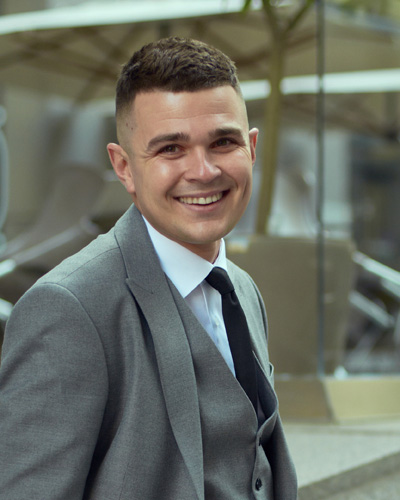





Work algorithm
We ensure the achievement of results exclusively within the legal framework, avoiding the use of any questionable methods.Initial consultation and conclusion of the agreement on the provision of professional legal assistance
We ascertain the circumstances of the case, examine the documents available to the Client, and present possible further courses of action for consideration.We collect all information necessary for handling the case and conduct strategic brainstorming
We review the case materials in the police, prosecutor’s offices, SBI, NABU, SAPO, and courts in Kyiv and other regions of Ukraine.Accompanying
Active presence during interrogations, searches, investigative experiments, detentions, the serving of notices of suspicion or indictments, the selection of preventive measures, as well as other investigative actions.We collect evidence and review the prosecution’s materials
We gather evidence that justifies the Client in criminal proceedings, confirms their alibi, mitigates potential punishment, and positively characterizes them. This, in turn, enables us to build an optimal and reliable defence strategy.We provide defence during court proceedings
We ensure presence during the questioning of witnesses, experts, victims, and the accused. We review all available case materials and, on this basis, prepare motions to have evidence declared inadmissible or improper. We also participate in court debates.Challenging court decisions (if necessary)
We file appeals and cassation complaints, up to and including applications to the European Court of Human Rights.Results
The numbers that demonstrate our effectiveness.Your protection begins with a call!
Contact UsCases
- Refusal to issue an international passport
- Purchase and possession of psilocybin mushrooms
- Failure to provide assistance to a person in a dangerous condition
- Manslaughter through negligence
- Hooliganism and infliction of bodily injuries
- Driving a vehicle while under the influence of narcotic substances
- Knowingly false report of a crime
- Dissemination of false information on the Internet and in the media
- Late submission of an income declaration
- Driving a vehicle while intoxicated
- Road traffic accident resulting in bodily injuries
- Drug possession case
- Burglary with unlawful entry into a dwelling
- Infliction of bodily injuries and moral damages
Problem:
In this rather uncommon case, the attorney had to defend not only the rights and interests of his clients but also his own. While abroad, the attorney - just like his clients - applied to the state enterprise «Document» to obtain an international passport. However, despite the passports already being produced, the officials of the enterprise categorically refused to issue them without military registration documents - a requirement that did not exist at the time the passports were applied for.Solution:
As part of the pre-trial settlement process, the attorney submitted written requests to the State Migration Service of Ukraine and the state enterprise «Document» demanding that the international passports be immediately forwarded and issued. As expected, these requests were ignored by the authorities. Without hesitation, the attorney filed an administrative lawsuit. The legal position was based on a fundamental principle: the law has no retroactive effect. At the time the applications for the international passport were submitted, Ukrainian legislation did not contain any requirement to present military registration documents in order to receive it.
Result:
The court agreed with the attorney’s arguments, declared the inaction of the authorities unlawful, and ordered the international passport to be issued. This decision became a precedent - afterward, similar lawsuits began to appear en masse. Under public pressure and multiple court rulings, the state enterprise «Document» eventually fulfilled its obligations and issued international passports to everyone who had applied before the new requirements concerning military registration documents were introduced.
Reviews
I would like to express my gratitude to attorneys Kostiantyn Chetvertak and Yurii Zhuk.
Kostiantyn and I had two phone calls, each lasting 15-20 minutes, after which we met in a café, where he had no problem answering all of my questions. Most importantly, he did not “put rose-coloured glasses” on me – he spoke clearly and directly about what needed to be done and what consequences I might face.
I would also like to note that Kostiantyn himself said that the fee for his services should only be paid when the case actually goes to court, which inspires trust.
Yurii and Kostiantyn handled my administrative case and won it, gathering enough evidence, documents, footage from the scene, etc.
Two hearings were held without my presence, and during the third one, when I was giving testimony, the judge of the Darnytskyi District Court of Kyiv said, I quote: “You’re lucky with your attorneys!”
I highly recommend these professionals to everyone! Fortunately, my circle is not involved in criminal matters, but nowadays having a good lawyer in your phonebook can save your nerves, money, and – God forbid – years of your life.

I experienced an unpleasant incident that forced me to seek legal assistance from an attorney. At the time I reached out, my case was already in court, so there was very little time to react. Despite this, attorney Yurii Zhuk quickly reviewed all the case materials, explained the possible scenarios, and proposed a clear and understandable plan of action.
During the court proceedings, Yurii demonstrated a high level of professionalism, attention to detail, and confidence – all of which immediately reassured me. As a result of the case review, I did not face any negative consequences, and I was fully satisfied with the outcome.
I highly recommend turning to attorney Yurii Zhuk, as he is a competent, responsible, and genuinely committed professional who knows how to effectively protect the interests of his clients.

I would like to express my sincere gratitude to attorneys Yurii Zhuk and Kostiantyn Chetvertak for their professional assistance.
In April 2019, a detective unexpectedly came to my home with a warrant to conduct a search. A large amount of cash and electronic equipment was seized, and immediately after the search I was served several summonses for questioning. It was clear that a notice of suspicion was being prepared. On the recommendation of acquaintances, I consulted the attorneys of the “Crime Defenders” law firm.
Yurii and Kostiantyn reacted very quickly: they promptly reviewed the case materials and took the situation under control. Thanks to their qualifications and competent work, all of my seized property was returned to me in the shortest possible time.
In addition, the attorneys prepared me for the interrogation so effectively that the investigator failed to obtain the statements he was seeking. This significantly influenced the further course of events and essentially protected me from serious consequences, as I was ultimately never served with a notice of suspicion.
I am sincerely grateful for their help. I cannot imagine how things might have ended had I not turned to these specialists.

I turned to the attorneys for help after a car accident caused by large potholes on the highway. My car was completely destroyed, and my friends and I survived only by miracle. Despite the fact that the road service was at fault, the police issued a traffic violation report against me.
The attorneys took on my case and secured my acquittal in the administrative proceedings. After that, they continued the fight for compensation, and ultimately the Supreme Court ruled in my favor.
The Road Service was ordered to pay the full value of my destroyed car, moral damages, and court expenses. The decision was enforced, and I received all the compensation I was entitled to.
I initially contacted the attorneys based on a recommendation – and now I can confidently recommend them myself. This is a strong team: always in touch, precise and efficient in their work, and very understanding regarding payment arrangements, which was important to me as a mother raising a small child.
I am fully satisfied with both the result and the quality of their work. They are true professionals who bring cases to a successful conclusion.

I am a professional football player and play for one of the clubs in the Ukrainian Premier League. Recently, I faced an unpleasant situation – false information about me was spread in the media and on social networks. This could have seriously affected both my reputation and my sports career, so I had to go to court to protect my name.
I turned to attorney Yurii Zhuk for help, as I knew him personally and trusted his professionalism. Yurii quickly assessed the situation, identified the risks, gathered the necessary evidence, and built a clear defence strategy. Thanks to his work, we succeeded in proving that the information was false and won the case.
I sincerely thank Yurii for his thoughtful approach, responsibility, and high-quality legal assistance. If you ever face legal issues related to your reputation or anything else, I strongly recommend contacting him. A true professional who brings every case to a logical and fair conclusion.

Attorney Yurii Zhuk represented my interests in a criminal proceeding back in 2017. Throughout our cooperation, he proved himself to be a competent, responsible, and detail-oriented professional who provides high-quality legal assistance at every stage of the criminal process.
Yurii helped me avoid unnecessary financial expenses during the stage of compensating the victim and secured the minimum possible punishment for me – one that was more lenient than prescribed by law.
I was completely satisfied with the result and can sincerely recommend Yurii as a knowledgeable and effective attorney who approaches his work – and his clients’ interests – with genuine responsibility.

My sincere gratitude goes to the young, driven, and talented attorneys Yurii Zhuk and Kostiantyn Chetvertak, who took on a difficult and unpleasant case involving corruption and embezzlement of funds in the OSBB “Zenit”.
For three years, the Pechersk District Police Department conducted a fruitless pre-trial investigation into the embezzlement of 1.5 million UAH from the association’s bank accounts by its former chairman. No attorney was willing to take on this seemingly hopeless case.
Thanks to Yurii and Kostiantyn, the case was finally submitted to the Pechersk District Court of Kyiv for further consideration, giving the residents of OSBB “Zenit” real hope that their funds will be recovered.
I can confidently recommend these Attorneys as competent specialists and true professionals in every sense of the word.
I am sincerely grateful to attorney Yurii Zhuk for the professional legal assistance and full support he provided throughout my case. Yurii explained everything in clear, simple language, paid close attention to every detail, and did everything possible to achieve a successful outcome. This gave me confidence and hope for a positive resolution of my situation.
In a case against state authorities, the court ruled in my favor — despite the fact that many people in similar circumstances were unable to achieve this due to the complexity of such proceedings and the lack of proper experience. In my opinion, this clearly demonstrates the high level of the attorney’s professionalism.
This was my first experience defending my rights and interests in court, and it turned out to be successful thanks to the efforts of attorney Yurii Zhuk.
Thank you!

I would like to express my sincere gratitude to attorney Yuriy Zhuk for his professional and effective work.
My case concerned obtaining a foreign passport, and at the time of contacting him, the prospects seemed rather bleak. Nevertheless, Yuriy promptly took charge of the matter, carefully assessed the situation, identified the optimal strategy, and carried out all the necessary legal actions. Thanks to his quick response and high level of competence, the issue was resolved positively even before the final court decision was rendered.
I would especially like to thank him for clear communication, attention to detail, and support at every stage of the process. Mr. Yuriy’s professionalism was evident in every step – from the initial consultations to achieving the final result.
I sincerely recommend this attorney to anyone in need of reliable legal assistance.
Yurii and Kostiantyn came to my aid during one of the most difficult periods of my life. When charges were brought against me, I found myself in a situation where any mistake could have had serious consequences.
The attorneys took on my criminal case with full responsibility, showing exceptional attention to detail, meticulously examining every circumstance, and becoming a true support in my confrontation with the prosecution.
Thanks to their work and a well-thought-out defence strategy, I was able to avoid a criminal conviction and a suspended sentence — an outcome that was critically important in my situation.
Looking back now, I understand that turning to them immediately after the charges were filed was the right and possibly decisive step. Had I delayed or chosen another path, everything could have ended much worse.
I am sincerely grateful to Yurii and Kostiantyn for their resilience, dedication, professionalism, and support.